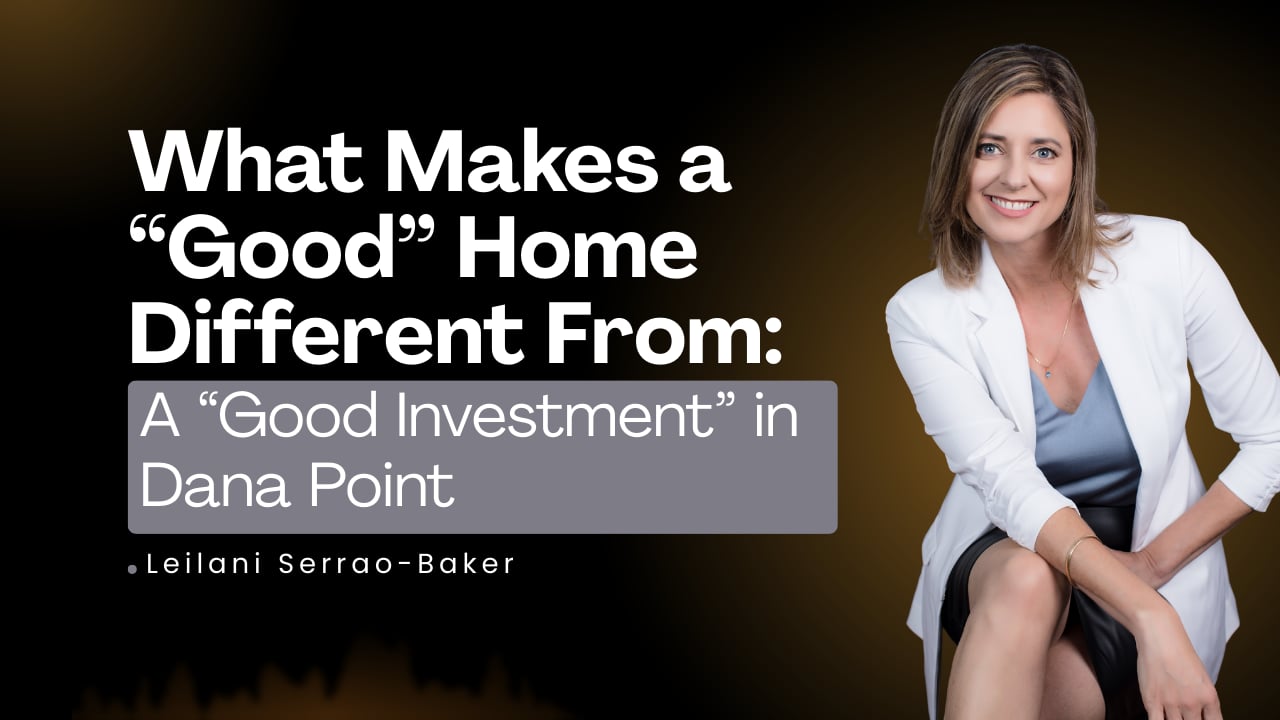
What Makes a “Good” Home Different From a “Good Investment” in Dana Point
In Dana Point, buyers often use the words “good home” and “good investment” interchangeably.
But they are not the same thing.
Sometimes they overlap.
Sometimes they don’t.
And understanding the difference can completely change how you buy.
A “Good Home” Is About Daily Life
A good home supports your lifestyle.
It fits:
-
Your routines
-
Your comfort preferences
-
Your long-term plans
-
Your emotional sense of belonging
In Dana Point, a good home might mean:
-
Walkability
-
Single-level living
-
Privacy
-
Proximity to the coast
-
A layout that simply feels right
A good home answers the question:
“Will I enjoy living here every day?”
It is personal.
It is emotional.
It is experiential.
Lifestyle alignment is often the deciding factor, which is why understanding how priorities evolve matters, as discussed in How Lifestyle Changes Affect Where You Should Live in Dana Point.
A “Good Investment” Is About Structure and Scarcity
A good investment behaves well over time.
It benefits from:
-
Limited inventory
-
Desirable location fundamentals
-
Long-term ownership demand
-
Consistent buyer interest
In Dana Point, investment strength often comes from:
-
Supply constraints
-
Coastal desirability
-
Stable homeowner base
-
Lifestyle-driven demand
A good investment answers the question:
“Will this property hold its value or grow responsibly over time?”
It is analytical.
It is structural.
It is strategic.
These structural fundamentals are explored more deeply in What Makes Dana Point Home Values Hold Up Over Time.
When They Align — That’s the Sweet Spot
The strongest purchases happen when a home is both:
✔ Good for your life
✔ Structurally strong over time
But buyers get into trouble when they chase only one side.
-
Buying purely for investment can lead to living in a home that doesn’t fit.
-
Buying purely for emotion can ignore fundamentals that matter long-term.
Dana Point rewards balance.
Why This Matters More in Dana Point
Dana Point is not a volume-driven market.
It is lifestyle-driven.
That means:
-
People buy for how it feels
-
They stay longer
-
Inventory turns slower
-
Desirability remains steady
Because of this, homes that align with both lifestyle and fundamentals tend to perform best.
Understanding the distinction helps buyers avoid regret — and make decisions that age well.
A Better Question to Ask
Instead of asking:
“Is this a good investment?”
Try asking:
-
Is this a good home for how I want to live?
-
Does it sit in a structurally strong part of Dana Point?
-
Would I feel confident owning this long-term?
When both answers are yes, that’s when buying becomes less stressful — and more strategic.
If you’re also weighing timing, you may find this helpful: Should You Buy Now or Wait If You Plan to Stay in Dana Point Long-Term
About the Author
Leilani Serrao-Baker
Dana Point Real Estate Professional
Leilani Serrao-Baker
28202 Cabot Rd Ste 300
Laguna Niguel, CA 92677
(949) 444-9175
https://civitasrealtyca.com
Leilani Serrao-Baker is a Dana Point real estate expert specializing in helping buyers and sellers navigate the coastal Orange County market. With over 14 years of experience, she is known for helping clients make strategic, informed real estate decisions with a focus on long-term value.